Author: Admin

  • Everything You Need to Know About Bergen Bobilparkering: Motorhome Parking in Norway at Kanalveien 54

    Everything You Need to Know About Bergen Bobilparkering: Motorhome Parking in Norway at Kanalveien 54

    Introduction

    Bergen, Norway, often referred to as the Gateway to the Fjords, is a popular destination for outdoor enthusiasts, especially those traveling in motorhomes. The city’s stunning landscapes, rich history, and vibrant culture make it an attractive spot for travelers seeking adventure. However, to fully enjoy the experience, it’s essential to have access to reliable motorhome facilities. This article provides a review of Bergen bobilparkering (Bergen motorhome parking) in Bergen with information about facilities like parking area, waste management services, payment options, and costs, ensuring that outdoor enthusiasts have all the necessary information for a seamless visit.

    Aerial view of Bergen motorhome parking at Kanalveien 54, showing marked spaces and proximity to city center
    Bergen Bobilparkering at Kanalveien 54 offers year-round motorhome parking with easy access to public transport and downtown Bergen.

    Motorhome Parking Area

    Location and Accessibility

    The accessibility of motorhome facilities in Bergen is paramount for travelers. The primary parking area is situated close to the city center, making it convenient for visitors to explore local attractions. This central location allows travelers to park their motorhomes without worrying about being far from key sights like Bryggen, a UNESCO World Heritage site, and the Fløibanen funicular, which provides stunning panoramic views of the city.

    Moreover, the proximity to public transport options further enhances accessibility. Buses and light rail services connect the parking area to various parts of Bergen, allowing travelers to venture beyond the immediate vicinity without needing to drive their motorhomes through the sometimes congested city streets.

    Marked Parking Spaces

    The motorhome parking area features clearly marked spaces designed to accommodate vehicles of various sizes. Each space is ample enough to ensure that motorhome owners can park without the risk of scratching or damaging their vehicles. The layout is intuitive, reducing the likelihood of confusion upon arrival. Signage throughout the area guides drivers to find suitable parking quickly and efficiently.

    Facilities Available

    Number of parking spaces: 40
    Chemical toilet disposal available
    Greywater disposal available
    General waste disposal available, with separate containers for glass/metal and paper
    Fresh water refill station available

    👉 For more details about this location, visit the dedicated page: Bergen bobilparkering Kanalveien 54 – camper2park
    There you’ll find a full overview of available facilities, nearby attractions, and practical information. The page includes a direct link to Google Maps for navigation, as well as a 10-day weather forecast to help you plan your stay.

    To discover other motorhome parking spots in Bergen or across Norway, visit our Camper2Park Norway overview page for a full list of locations, maps, and travel tips.

    Payment Options

    Card payment available at the on-site machine or via the EasyPark app. Daily rate for 2025: NOK 350

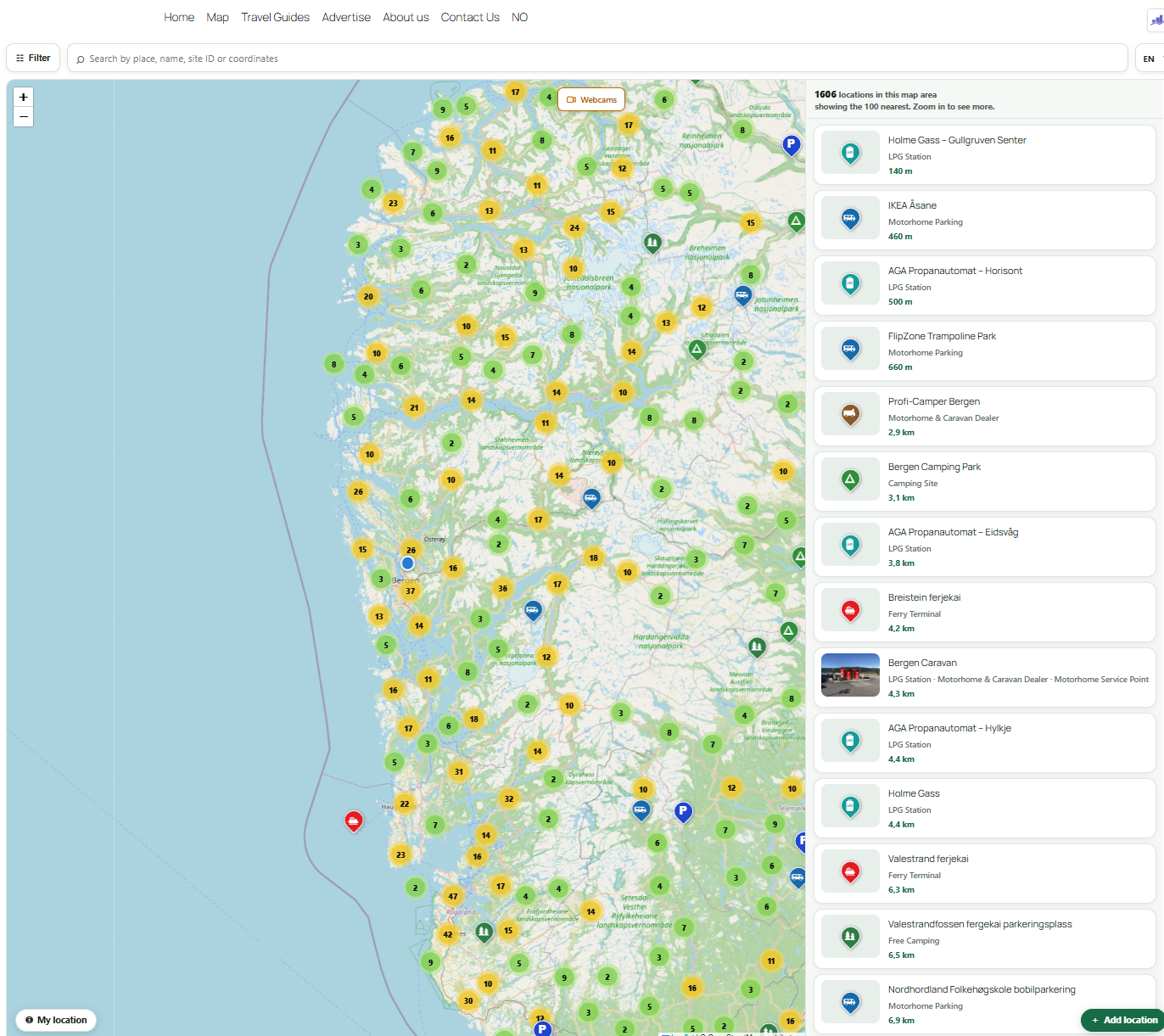
    To find an overview of motorhome parking areas, waste disposal stations, campsites, 24-hour propane vending machines, and free camping spots across Norway, visit our Map

  • Your Ultimate Guide to Camper Travel in Norway: Top 10 Locations

    Your Ultimate Guide to Camper Travel in Norway: Top 10 Locations

    Norway, with its spectacular nature and rich cultural heritage, is a paradise for camper enthusiasts. The country offers countless adventurous destinations that give you the opportunity to explore dramatic fjords, majestic mountains, charming villages, and historic towns. Whether you are looking for scenic roads, iconic rock formations, or cultural experiences, Norway has something for everyone. In this article, we will take you on a journey through the top 10 locations to visit with a camper in Norway. From the dramatic mountains of Lofoten to the historic mining town of Røros, we will provide you with a comprehensive guide to the best places to explore. For each location, we will also include a paragraph about the most important things to do or must-see, as well as links to official tourist information.

    Photo by Ximonic (Simo Räsänen) – Wiikipedia

    1. Lofoten

    Lofoten is known for its dramatic mountains, deep fjords, and picturesque fishing villages. In summer, you can experience the midnight sun, while winter offers the chance to see the northern lights. Important activities include hiking, fishing, and visiting charming villages like Henningsvær and Reine.

    Tourist info: https://www.lofoten.info/

    Lofoten in Norway

    Photo Petr Šmerkl, Wikipedia

    2. Geirangerfjord

    Geirangerfjord is a UNESCO-listed natural gem with impressive waterfalls like The Seven Sisters and The Suitor. The fjord is surrounded by steep mountains and lush vegetation. Activities include boat trips, hiking to viewpoints like Flydalsjuvet, and visiting the Norwegian Fjord Center.

    Tourist info Geirangerfjord Sightseeing tours by ship, bus, car, bike helicopter, activities, shorexcursions – VISIT Geiranger AFoto: S

    Geirangerfjord in Norway

    Photo Diego Delso, Wikipedia

    3. Atlantic Road

    The Atlantic Road is a spectacular stretch of road that connects several small islands and skerries along Norway’s coast. The road offers fantastic views of the sea and is a popular destination for road trips. Important stops include Storseisundet Bridge and Håholmen.

    Tourist info The Atlantic Road – Fjord NorFoto way

    Atlantic Road in Norway

    Photo Stefan V. Baumgartner, Wikipedia

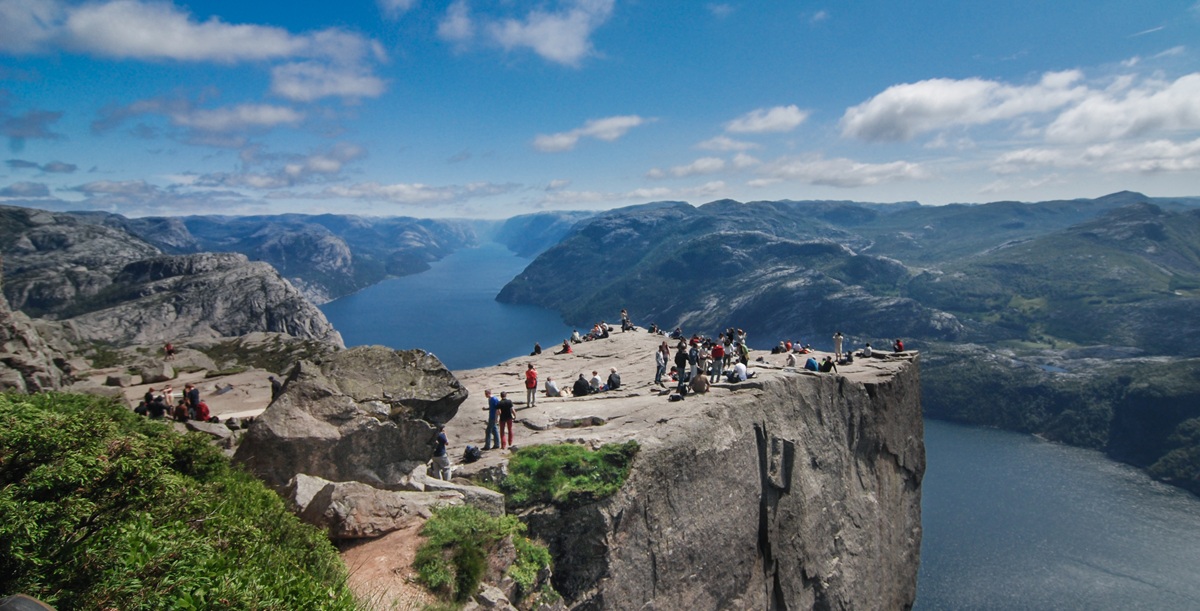
    5. Preikestolen

    Preikestolen is one of Norway’s most iconic rock formations, with its spectacular view over the Lysefjord. The hike to the top takes about 4 hours and offers fantastic nature. Important activities include hiking, photography, and visiting Preikestolen Mountain Lodge.

    Tourist info THE OFFICIAL WEBSITE FOR PREIKESTOLEN – PULPIT ROCK

    Røros in Norway

    Photo Stefan Krause, Wikipedia

    6. Røros

    Røros is a historic mining town that is on the UNESCO World Heritage List. The town is known for its charming wooden houses and rich cultural heritage. Activities include visiting the Røros Museum, hiking in the surrounding area, and exploring local shops and cafés.

    Tourist info Visit Røros and Østerdalen – Visit Røros and Østerdalen

    Photo Tackbert, Wikipedia

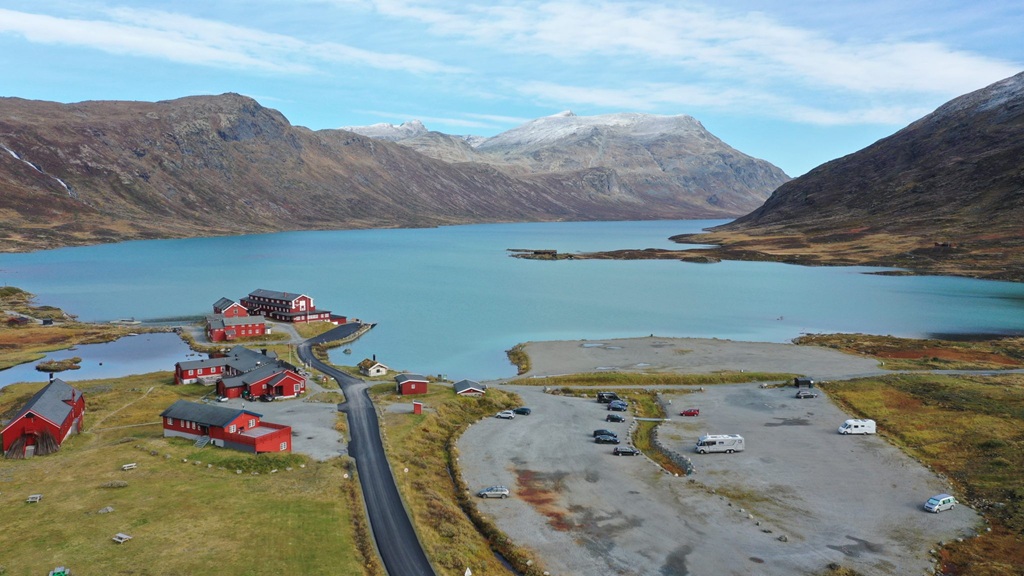
    7. Jotunheimen

    Jotunheimen is one of Norway’s most popular mountain areas, known for its high peaks and beautiful valleys. The area offers great hiking opportunities, including hikes to Galdhøpiggen and Besseggen. Important activities include hiking, climbing, and visiting Jotunheimen National Park.

    Tourist info Welcome to Lom and Jotunheimen – Jotunheimen

    Eidsbugarden in Jotunheiem, Norway

    Photo Karstein Eikås

    8. Bergen

    Bergen is a charming coastal city surrounded by fjords and mountains. The city is known for its historic wooden houses at Bryggen and the Fløibanen funicular that takes you to the top of Fløyen. Activities include visiting the Fish Market, hiking on Fløyen, and exploring local museums and galleries.

    Tourist info Visit Bergen – Official Bergen (Norway) Tourist Information Site

    City of Bergen Norway

    Photo TomasEE, Wikipedia

    9. Sognefjord

    Sognefjord is Norway’s longest and deepest fjord, surrounded by majestic mountains and beautiful landscapes. The fjord offers great opportunities for boat trips, hiking, and visiting charming villages like Balestrand and Flåm. Important activities include boat trips, hiking, and visiting the Flåm Railway.

    Tourist info Visit Sognefjord

    Balestrand in Sognefjord

    Photo Holger Uwe Schmitt, Wikipedia

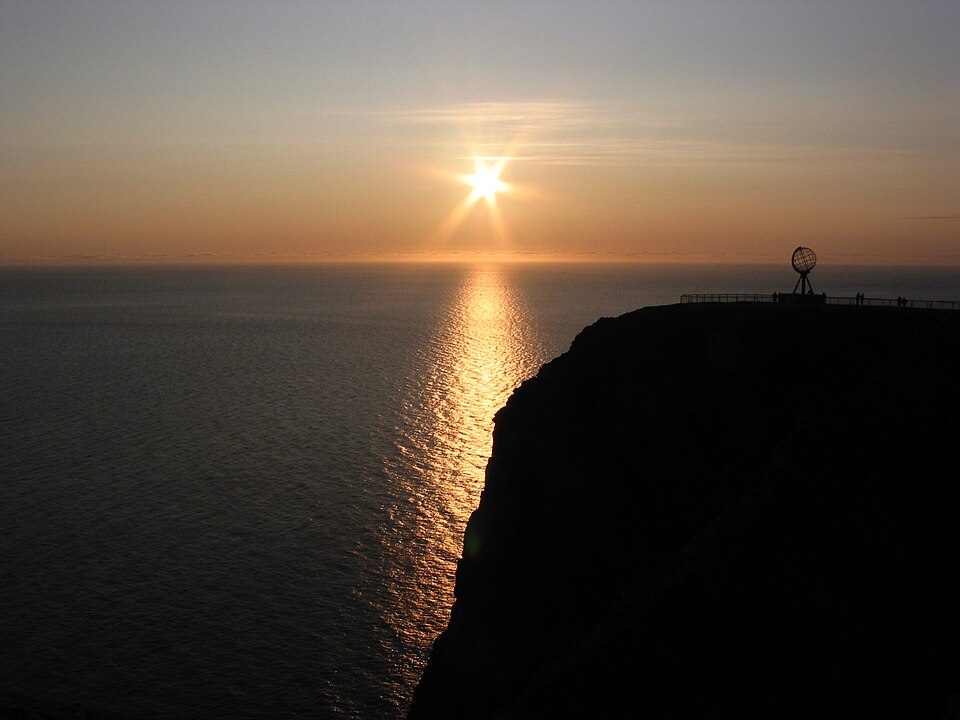
    10. North Cape

    North Cape is the northernmost point on the European mainland and offers spectacular views of the Barents Sea. The area is known for its dramatic nature and midnight sun in summer. Activities include visiting the North Cape Hall, hiking in the surrounding area, and exploring local attractions.

    Tourist info Visit Nordkapp

    North Cape Norway

    Photo Yan Zhang, Wikipedia

    Discover thousands of motorhome stopovers and campsites on our interactive Map. Find the perfect place to stay, explore new destinations, and plan your next adventure with ease.

  • Explore Europe with Camper2Park: Your Ultimate Guide to Motorhome Parking, Campsites, and Dump Stations

    Explore Europe with Camper2Park: Your Ultimate Guide to Motorhome Parking, Campsites, and Dump Stations

    Planning a motorhome adventure across Europe? Camper2Park makes it easy to find the best motorhome parking spots, scenic campsites, and convenient dump stations—all in one place. Our interactive map lets you browse thousands of verified locations, each linked to Google Maps for seamless navigation.

    Whether you’re traveling through Norway’s fjords or the vineyards of France, you’ll find up-to-date weather forecasts for every site, helping you plan with confidence. Want to contribute? Click the + button at the top of the map to submit new locations and help fellow travelers discover hidden gems.

    Camper2Park is designed for mobile, tablet, and desktop—so you can plan your trip wherever you are. Start exploring today and make your next motorhome journey unforgettable.

    What We Offer:

    1. Comprehensive Map Overview:

    Explore our free detailed map overview covering motorhome and campsites across Europe. With our user-friendly map feature, you can easily find and select sites based on your preferences and needs.

    2. Easy Search Function:

    Our search function makes it easy to find motorhome and campsites. Search by typing name of the location, adress, or postnumber.

    3. Weather Information:

    Check the weather conditions for each location directly. We provide up-to-date weather information so you can plan your trip better and be prepared for all conditions. Select a location and click the “Weather Forecast” link for the location. This will give you the weather forecast for the next 10 days.

    4. Integration with Google Maps:

    View the sites directly in Google Maps for easy navigation and planning. Our integration with Google Maps makes it easy to find your way to your chosen motorhome or campsite.

    Why Choose Camper2Park:

    Our website is designed to be intuitive and easy to navigate, allowing you to quickly and efficiently find the information you need. It is specially designed to work seamlessly on mobile phones, iPads, and PCs.

    Comprehensive Coverage: We cover motorhome and campsites across Europe, so you always find a place to park and relax.

    Updated Information: We ensure that all information on our website is up-to-date, so you always have access to the latest data on sites and weather conditions.
    If there is any information missing or not updated, you can send an email to post@camper2park.com, and we will update it promptly. You can also report any missing sites in the overview. We greatly appreciate tips and feedback so that we can make this service even better.

    Conclusion:

    With Camper2Park, it’s easier than ever to plan your next motorhome or camping trip in Europe. Explore our website today and discover the best spots for your next adventure. Safe travels!

    Go to Map to find you ultimate spot.

  • Motorhome Travel in Norway: A Complete Guide to AutoPASS, Tolls & Ferry Costs

    Motorhome Travel in Norway: A Complete Guide to AutoPASS, Tolls & Ferry Costs

    Planning a road trip through Norway in your motorhome? Norway’s breathtaking landscapes, fjords, and mountain roads promise an unforgettable adventure, but there are a few practical details you need to be aware of before you hit the road. To make your journey as smooth as possible, it’s important to understand the toll and ferry payment systems that apply to motorhomes. In this article, we’ll provide you with a guide to the AutoPASS system, explain how AutoPASS for ferries works, and cover other important information about charges you may encounter on your travels. From registration to what to expect when crossing ferries with your motorhome, we’ve got you covered. Get ready to explore Norway with peace of mind!

    Toll Rings and Charges for Motorhomes

    Norway’s road system includes several toll rings in major cities and along highways, designed to manage traffic and fund infrastructure projects. Motorhome owners need to be aware of the toll classifications and payment systems to avoid unexpected charges.

    Vehicles Under 3.5 Tons
    Motorhomes weighing under 3.5 tons are typically classified in the same category as regular passenger cars. This means they are subject to standard car toll rates.

    Vehicles Over 3.5 Tons
    Motorhomes over 3.5 tons are generally placed in a higher toll rate category. However, if owners of motorhomes over 3.5 tons obtain a bombrikke (toll tag), they can pay the same toll rates as regular passenger cars. This is a significant cost-saving measure, especially for those planning extensive travel within Norway.

    Toll Payment Options


    Automatic Toll Payment
    Most toll stations in Norway are automated and use electronic systems to charge vehicles based on their registration number. The toll charge is automatically billed to the vehicle’s registered owner.

    AutoPASS Agreement
    To receive maximum discounts on toll charges, it is recommended to sign up for an AutoPASS agreement. This system not only provides discounts of up to 50% on tolls but also simplifies payment. An AutoPASS agreement includes receiving a bombrikke, which should be mounted on the vehicle’s windshield. For motorhomes over 3.5 tons, using a bombrikke allows them to pay the same rate as standard passenger cars, significantly reducing costs. It’s advisable to order the bombrikke well in advance of your travels to ensure it arrives in time.

    Note: It is not possible to get a toll tag for light vehicles up to 3,500 kg at Norwegian border. If you choose to enter an user agreement, this should be done well in advance before driving to Norway. Toll tags are only available at the border for heavy vehicles above 3,500 kg. 

    Ferry Charges and Payment Methods
    Ferries are a vital part of the transportation network in Norway, especially in the western and northern regions. Knowing how to navigate ferry charges and payments can greatly enhance your travel experience. For more information about free ferries i Norway, see our article and map over free ferries Free travel on selected ferries in Norway – camper2park

    Calculating Ferry Charges

    Vehicle Length and Height
    Ferry fares for motorhomes are typically based on the vehicle’s length and height. Knowing these dimensions is crucial for accurately estimating costs.

    Passenger Charges
    In addition to vehicle charges, there are usually separate fees for passengers. These rates can vary depending on the specific ferry route.

    Payment and Discounts

    AutoPASS for Ferries
    Many ferries in Norway now accept the AutoPASS system, which simplifies the payment process and offers discounts. By creating an account with AutoPASS for ferries, you can link your ferry charges to your AutoPASS account and receive up to a 50% discount on ferry passages.

    Free Ferry Crossings
    Many ferry routes in Norway have recently been made free, fully subsidized by the government. This makes travel across fjords more accessible and cost-effective. It’s worth checking current ferry routes and their costs as these can change with new government policies.

    Maximizing Discounts and Managing Travel Costs

    To optimize your travel experience and manage costs effectively, consider the following tips:

    1. Register Your Motorhome Vehicle Correctly
    Ensure your motorhome is classified correctly with toll and ferry authorities to benefit from applicable discounts. Sign up for an AutoPASS agreement here – AutoPASS

    2. Use AutoPASS
    Signing up for AutoPASS and register your tag in the AutoPASS for a ferry prepayment agreement. The AutoPASS for ferry prepayment agreement is an additional agreement for those with an AutoPASS approved tag in their vehicle.This can lead to significant savings (50% discount) on tolls and ferry charges, particularly for frequent travelers. Register your AutoPASS tag in the AutoPASS for a ferry prepayment agreement her AutoPASS-ferje

    3. Plan Your Route
    Utilize online tools and apps to plan your journey, check toll and ferry charges, and identify free ferry routes. This planning can help you budget more effectively.

    4. Stay Informed
    Toll and ferry regulations can change, so it’s important to stay updated on the latest information. Check the AutoPASS website and the Norwegian Public Roads Administration (Statens vegvesen) for current details. By understanding and planning for toll and ferry charges, motorhome owners can enjoy a smoother and more cost-effective journey across Norway’s stunning landscapes. Happy travels!

    Useful links:

    Free travel on selected ferries in Norway – camper2park

    Foreign vehicles | AutoPASS

    AutoPASS-ferje

    Gratis ferjer – AutoPASS-ferje (autopassferje.no)

  • Toll Fees for Motorhomes in Austria: Vignette and GO-Box Requirements for Entry

    Toll Fees for Motorhomes in Austria: Vignette and GO-Box Requirements for Entry

    Planning a motorhome trip to Austria? Understanding the toll fees and regulations for your motorhome is crucial for a hassle-free journey. This comprehensive guide covers the necessary requirements for motorhomes under and over 3.5 tons, including information on the vignette and GO-Box. Read on to ensure you are well-prepared for your trip to Austria.

    Toll Requirements for Motorhomes Under 3.5 Tons in Austria

     Vignette: What You Need to Know

    If your motorhome weighs up to 3.5 tons, you’ll need to purchase a vignette to travel on Austria’s motorways and expressways. This sticker is required for all vehicles with a Technically Permissible Maximum Laden Mass (TPMLM) of 3.5 tons or less, including cars, motorcycles, and light motorhomes.

    – Where to Buy: You can buy the vignette at border crossings, gas stations, or online.

    – Valid Durations: Vignettes are available for 10 days, 2 months, or one year.
    The vignette with a validity period of 1 day is a new purely digital product and is available in the ASFINAG toll shop or the ASFINAG app.

    – Cost: For example, a 10-day vignette costs approximately €11.50 (2024 prices, subject to change).

     Additional Costs

    – Tunnels and Special Roads: Some tunnels and high-altitude roads may require extra fees, even for vehicles under 3.5 tons.

    Vignette

     Toll Requirements for Motorhomes Over 3.5 Tons in Austria

    GO-Box: Essential Information

    For motorhomes exceeding 3.5 tons, a GO-Box is required for traveling on Austrian motorways and expressways. This electronic device calculates tolls based on distance traveled, the vehicle’s emission class, and the number of axles.

    – Where to Obtain: Purchase or rent the GO-Box at border crossings or selected stations within Austria.

    – Cost Factors: The toll rate depends on the vehicle’s emission class, number of axles, and distance traveled.

    Important Note: To ensure accurate toll charges, you must provide evidence of certain rate-relevant characteristics. Send this evidence to ASFINAG in advance or within 30 days of notification at a GO point of sale. Be aware that GO point of sale locations do not verify these documents. For more details on verification requirements, visit the [ASFINAG website](https://www.asfinag.at).

     Additional Charges – Special Roads: Additional fees apply to some special roads, tunnels, and bridges beyond the GO-Box Austria charges.

    Go Maut On-Board Unit

    Section Tolls in Austria

    Austria has six motorway sections where an additional toll ticket is required due to the high construction costs of special structures, such as major tunnels like the Tauern Tunnel and Gleinalm Tunnel. This section toll is an extra fee on top of the standard vignette or GO toll, regardless of your vehicle’s weight.

     How to Obtain a Vignette and GO-Box in Austria

    1. Vignette: Purchase online or at gas stations, toll stations, or border crossings upon arrival in Austria. Ensure it is clearly visible on your vehicle’s windshield.

    2. GO-Box: Obtain at the border or designated stations. You’ll need your vehicle’s registration number, emission class, and number of axles. Proper installation of the GO-Box is essential for accurate toll payment registration.

    Tips for a Smooth Motorhome Journey in Austria

    – Prepare Early: Purchase your vignette or GO-Box ahead of time to avoid delays.

    – Verify Vehicle Details: Make sure you have accurate information about your motorhome’s emission class and axle count to calculate toll costs correctly.

    – Adhere to Regulations: Follow Austria’s traffic rules and road signs to ensure a safe and compliant journey. By following these guidelines, you’ll be well-prepared for a smooth entry and stay in Austria with your motorhome. Safe travels and enjoy your trip!

    Photos: ASFINAG

    Useful links:
    ASFINAG
    Mautkalkulator (asfinag.at)

  • Rothenburg ob der Tauber: A Fairytale Journey into Medieval Germany

    Rothenburg ob der Tauber: A Fairytale Journey into Medieval Germany

    Rothenburg ob der Tauber, a picturesque gem nestled in the heart of Bavaria, Germany, is a living testament to medieval charm and architectural splendor. This enchanting town, perched high above the Tauber River, invites visitors on a captivating journey through cobblestone streets and half-timbered houses.

    Where is Rothenburg ob der Tauber located

    Rothenburg ob der Tauber is situated in the Franconia region of Bavaria, approximately halfway between Frankfurt and Munich. Its strategic location on the Romantic Road, a scenic route through southern Germany, makes it easily accessible for those seeking a taste of medieval magic. Are you traveling on Autobahn A7, then Rothenburgh is easily available.

    What to do in Rothenburg

    Tip #1: Stroll Through the Old Town (Altstadt):

    Lose yourself in the enchanting Altstadt, where narrow winding streets lead to charming squares and hidden courtyards. Admire the well-preserved medieval architecture that takes you back in time.

    Tip #2: Visit the Market Square (Marktplatz):

    The heart of Rothenburg, Marktplatz, boasts the Renaissance-style Town Hall and the imposing St. Jakob’s Church. Don’t miss the vibrancy of the market square, especially during the Christmas season when it transforms into a winter wonderland.

    Tip #3 Explore the Medieval Crime and Justice Museum:

    Uncover the darker side of medieval life at the Medieval Crime and Justice Museum. Fascinating exhibits showcase historic crime and punishment methods, offering a unique perspective on the town’s past.

    https://www.kriminalmuseum.eu/


    Tip #4: Walk the Town Walls:

    Ascend the town walls for panoramic views of Rothenburg and the surrounding countryside. The journey along the walls provides a glimpse of the town’s fortifications and is a photographer’s delight.

    Tip #5 Local Cuisine:

    We can recommend food and drinks at Hotel-Gasthof Goldener Greifen where you can sit outside in a small cozy garden. They serve a very good local red wine made from grapes grown on the slopes just outside the city walls

    Tip #6 Motorhome and caravan parking

    If you’re arriving by motorhome or caravan, we can recommend camping at Parking area P2 Nördlinger Straße situated just across the street from the historic old town. From there, it’s just a 3-minute walk to reach the city gates. In the area you have access to empty your WC and greywater, and some pitches provide access to electricity. See the address to the stellplatz in the map below. It is no problem to camp here for a few days while exploring all the exciting things that Rothenburg has to offer.

    It is possible to pay with coins at the machine on-site, but the easiest method is to download the Parkster app. With the app, you can enter card information, making the payment process quick and convenient.

    Homepage (parkster.com)

    Conclusion:

    Rothenburg ob der Tauber, a gem in the heart of Germany that takes you on a journey through cobblestone streets and medieval magic. I hope you take the chance to visit this adventure of a city, filled with history, charm, and of course, great German hospitality. Take some time to wander through the picturesque streets, enjoy the local delicacies, and let yourself be enchanted by the atmosphere.

    Useful links

    https://www.germany.travel/en/cities-culture/rothenburg.html

This website uses cookies. By continuing to use this site, you accept our use of cookies.  Learn more